Greensignalco
3 Practical Steps to Make Laser Engraver Fume Extraction Work for You
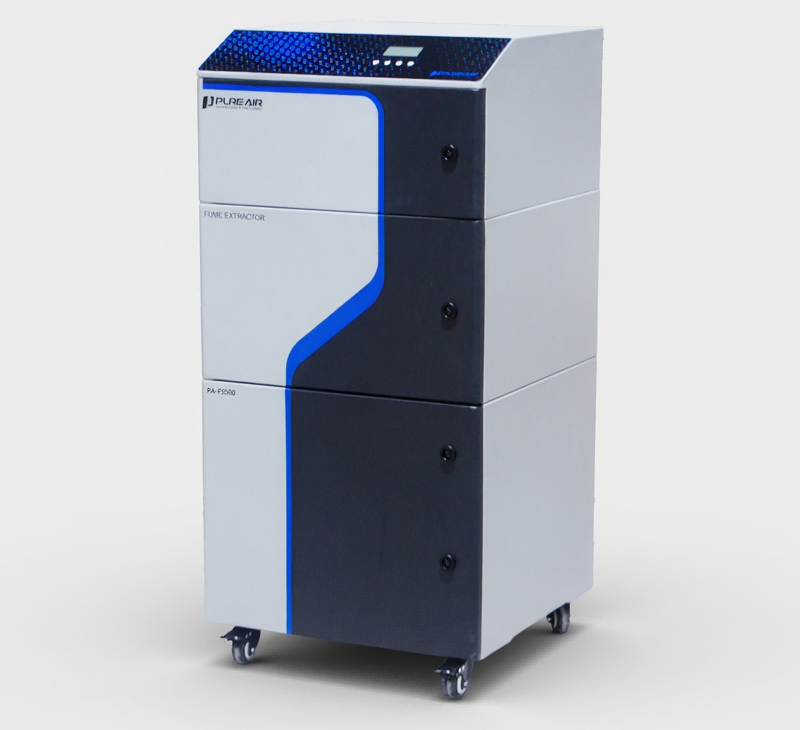
Introduction: A workshop moment, some data, and the real question
I once walked into a small maker space and could barely talk without coughing — the beam had been cutting acrylic for an hour and the room smelled like burnt plastic. In that same space, a basic laser engraver fume extractor sat unused in the corner because nobody trusted its results. Recent measurements show that laser cutting can raise particulate matter and VOCs quickly (PM2.5 spikes, in particular), and yet many shops still rely on ducting or desk fans as a “solution.” So here’s the question I keep asking: are we solving fumes, or merely moving the problem somewhere else? — funny how that works, right?
I write this as someone who‘s spent time installing and testing extraction systems. I’ll argue that the right equipment matters, but not all solutions are equal. We’ll look at why common fixes underperform, what real users feel when the gear fails, and what to look for next. Stay with me — the next section digs into the guts of traditional systems and where they trip up.
Part 2 — Why common solutions fail: a technical look at flaws and user pain
When people search for a fix, many end up considering an air purifier for laser engraver because it sounds tidy: plug it in, filter the air, breathe easy. But in my experience that rarely matches reality. Filters get saturated, airflow is mis-specified, and volatile organic compounds (VOCs) slip past activated carbon beds if the contact time is too short. We see poor filtration efficiency, uneven airflow rates, and ineffective capture at the source — and those are not trivial oversights. Look, it’s simpler than you think: capture close to the nozzle, control airflow, and match filter media to the contaminants.
How do traditional filters fall short?
Technically, a lot of systems focus only on particle capture (HEPA) while treating gases as an afterthought. That leads to two predictable problems. First, a HEPA-only approach lowers particulate counts but leaves VOCs — the stuff that smells and can be toxic. Second, installers often underestimate the needed air exchange rate; they use undersized fans and then wonder why the shop still smells. I’ve tested setups where the ventilation duct was too narrow, creating back pressure that reduced capture velocity at the cutter. It’s a chain reaction: poor capture velocity → recirculation → higher PM2.5. Wait, hear me out. We’ve found that combining a properly sized fan, pre-filter, HEPA stage, and a robust activated carbon stage gives far better results, particularly if you account for filtration efficiency in real-world duty cycles.
Part 3 — What’s next: principles for better designs and three evaluation metrics
Looking ahead, I want to focus on principles rather than product hype. New systems must start by measuring the real emission profile of the material being cut. From there, design the filtration stack to match — a balance of mechanical filtration (HEPA) for particulates and chemical adsorption (activated carbon or specialized sorbents) for gases. Modern units also factor in airflow rate and capture velocity, plus serviceability: easy filter swaps and clear indicators for end-users. If you're evaluating an air purifier for laser engraver, check whether it gives you those specs and can be tuned to your cutting load. This matters because a unit that looks powerful on paper can underperform in a crowded workshop environment.
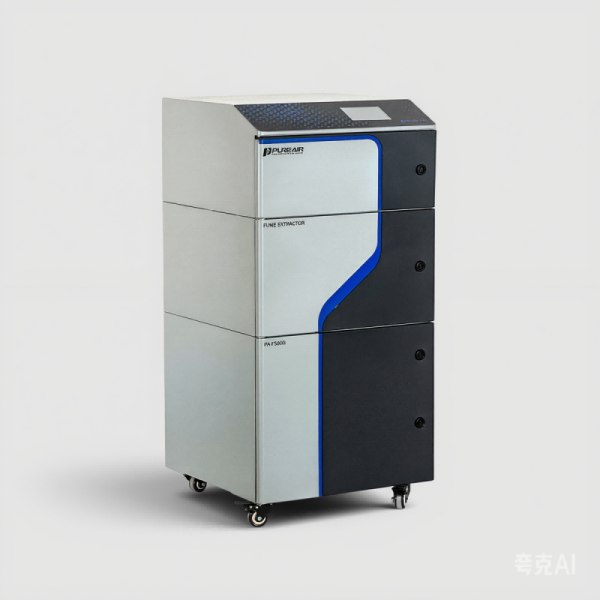 Real-world impact and actionable metrics
To wrap up with something practical: here are three metrics I trust when comparing systems — and I recommend you use them too. First, capture efficiency at the source (measured percent capture of emitted fumes). Second, total filtration efficiency across particles and gases (HEPA plus carbon performance under load). Third, replacement cost and downtime (how often filters need swapping and how easy the unit is to service). Those three let you compare apples to apples — noise levels and footprint matter, but they’re secondary to health-related performance. Also — tiny aside — maintenance plans tell you more about a vendor than glossy brochures do.
In short, don’t settle for a unit that only looks neat on the bench. I’ve seen modest systems outperform flashy models when the design was honest about airflow, filtration stages, and service. We choose solutions that work with real workflows, not wishful specs. For reliable support and proven approaches, consider checking resources from PURE-AIR.